When to ship in a box and when to use a mailer
Compare a box and a mailer against the same order, including insertion time, protection, billed weight and closure.
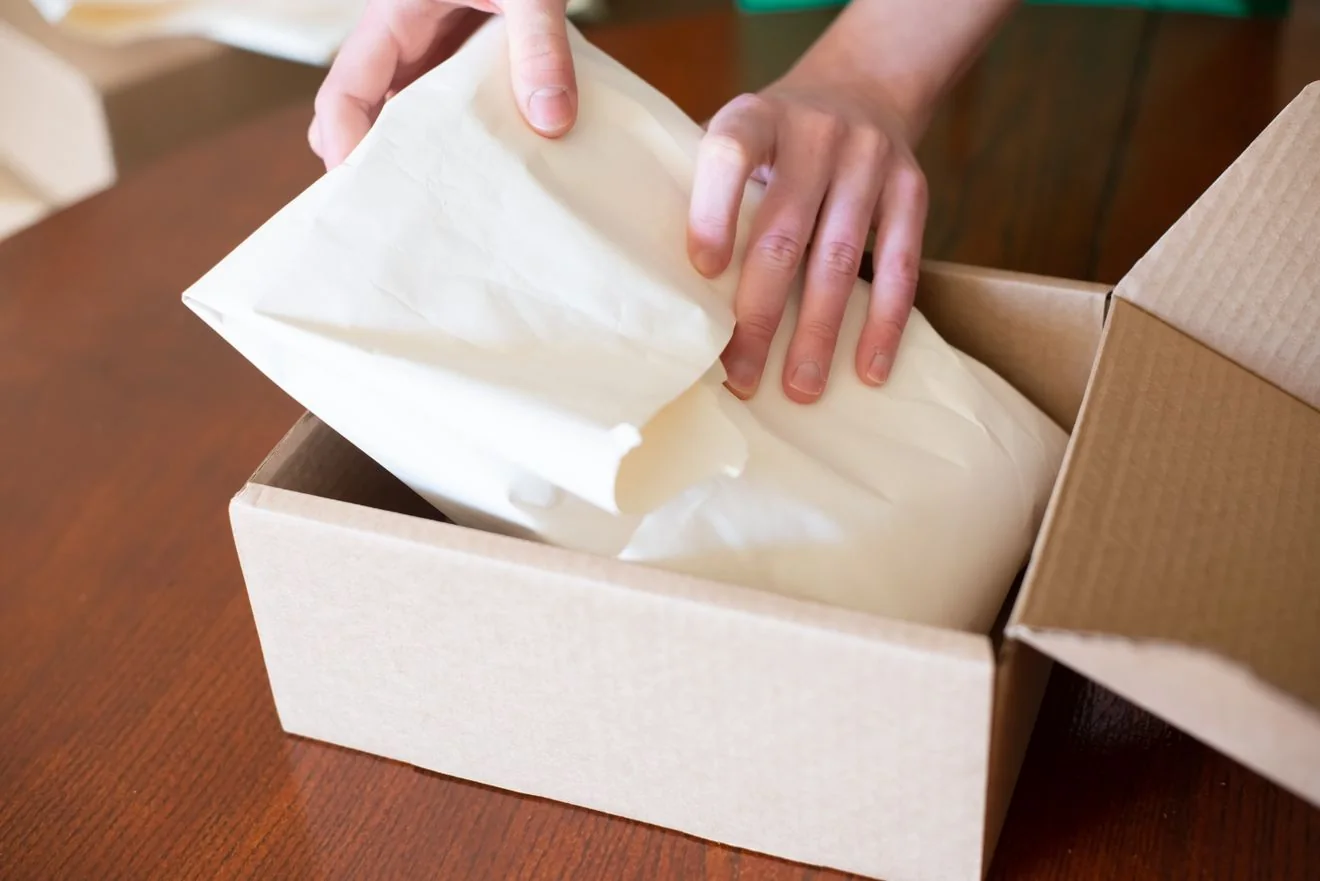
Choose one order to compare
Use a real product combination with the retail packaging, insert and expected shipping orientation. A folded garment with a rigid gift insert can behave differently from a garment alone. Note whether the fulfillment materials need to protect a cosmetic finish, hold a sharp edge, or keep components separated. Those requirements give you a practical reason to try a particular format.
Test insertion and closure
For a product 16 cm wide and 4 cm thick, a first-pass estimate for a nongusseted flat mailer with 2 cm of handling allowance is 22 cm of usable width. Measure between internal seams and repeat with the item in its actual orientation. Take several samples from the intended material. Check whether the product scrapes the opening, strains the adhesive, or needs to be folded differently to close.
Rate sealed samples on the same route
If an illustrative contract uses a 5,000 cm³/kg divisor, a 30 × 23 × 8 cm box weighs 1.104 kg by volume and a 31 × 24 × 5 cm mailer weighs 0.744 kg by volume. A half-kilogram billing step and a 0.9 kg scale weight for both samples would put them at 1.5 and 1 kg respectively under those assumptions. Flexible parcels can deform and their measured size should come from the carrier's measurement convention.
Record the switching rule
Write down the products and quantities that qualify for the mailer, the material code and the completion checks. Keep conditions for reverting to a carton within the pack instructions, such as corners that visibly strain the mailer. In a limited trial, compare sealing problems, order handling time and damage after a consistent claim window.